
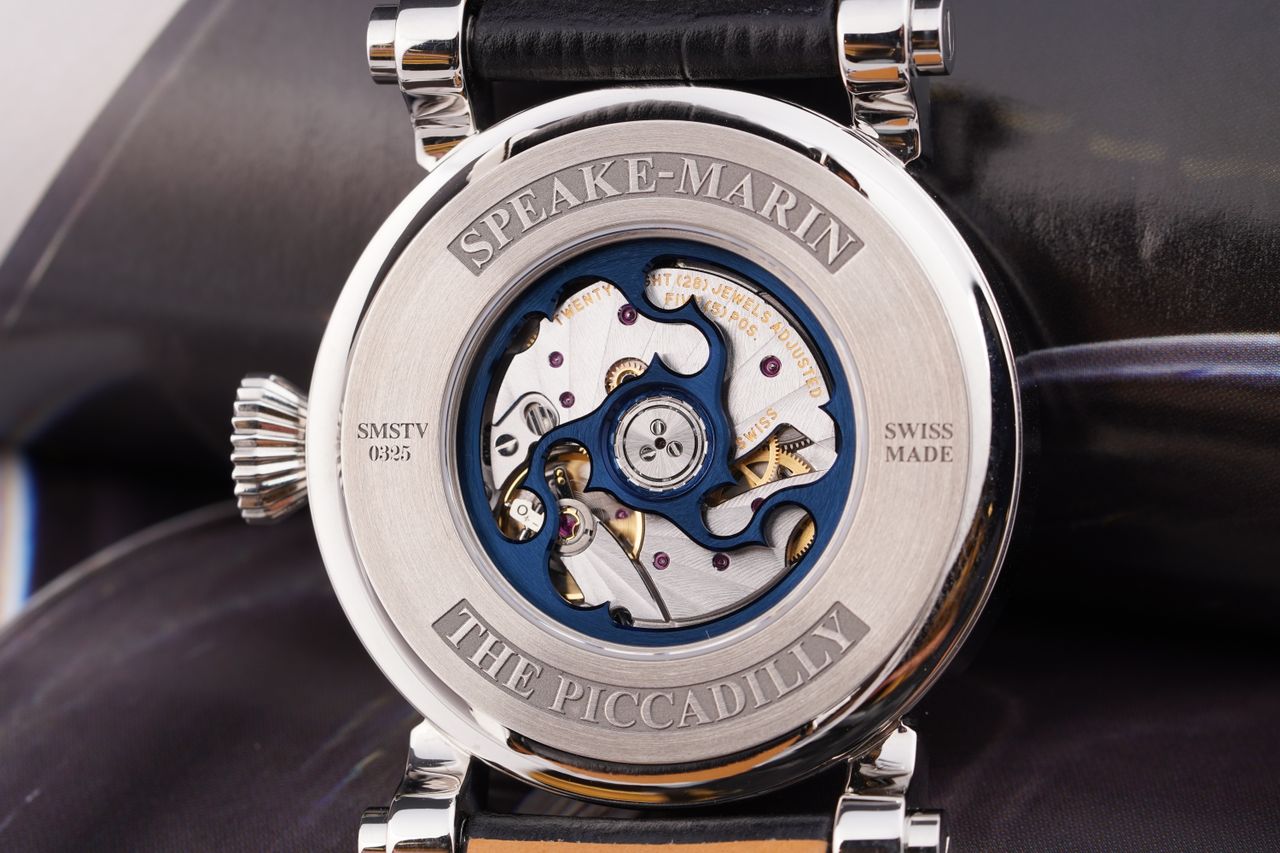
Photo by Quang Viet Nguyen: https://www.pexels.com/photo/the-back-case-of-a-speake-marin-the-piccadillly-wristwatch-9561316/
For decades, the phrase “Swiss Made” has been synonymous with precision, luxury, and unmatched quality. But recently, manufacturers in Switzerland have been dealing with heavy pressures. According to an article published by the Financial Times on 25 August 2026 (1), Swiss exporters are facing severe headwinds from protectionist trade policies—such as steep US tariffs—and a persistently strong Swiss franc. These factors are forcing companies to rethink what it means to be a Swiss manufacturer today.
Going premium instead of going cheap
When faced with a sudden 39 per cent US tariff, the Swiss garden tool manufacturer Felco did not cut costs or move its production to cheaper countries. Instead, the company doubled down on luxury. By adding features like leather-wrapped handles and gold-coated blades, they transformed their pruning shears into high-end lifestyle products (1).
This extreme focus on premium quality over mass-market appeal is a hallmark of the Swiss manufacturing strategy. Because Switzerland is a landlocked country with high wages and few natural resources, its companies have survived by becoming highly specialized. They know they cannot win on price, so they focus entirely on making products that customers are willing to pay a premium for.
The strict rules of Swissness
Maintaining the official “Swiss Made” label is not easy. Current legislation dictates that at least 60 per cent of a product’s manufacturing costs must be incurred inside Switzerland for it to bear the famous white-on-red cross (1). However, high local costs and currency appreciation have pushed some heritage brands to make tough choices.
For example, the 133-year-old sewing machine maker Bernina recently moved its serial production to Thailand, meaning it can no longer use the traditional label. Meanwhile, the sports shoe brand On, which manufactures in Asia, successfully pushed to use alternative marketing descriptions like “Swiss Engineering” (1). This has sparked a fierce debate among traditionalists and lawmakers about how to protect the integrity of the country’s world-famous branding.
Surviving in a protectionist world
Despite these global trade challenges, the Swiss industrial sector remains incredibly resilient. Companies have adapted by investing heavily in automation and relying on the country’s robust apprenticeship system to provide highly skilled workers. Furthermore, the Swiss government took the bold step of abolishing all tariffs on industrial imports on 1 January 2024 to lower supply chain costs for its local factories (1).
By focusing on highly specialized, indispensable niches—from vacuum valves used in semiconductors to precision pastry machinery—Swiss industry continues to prove its durability. The global market may be growing more fragmented, but by prioritizing cutting-edge technology and unparalleled quality, Swiss manufacturers are ensuring they remain impossible to replace.
References
(1) Financial Times, “The threats to ‘Swiss Made’”, published 25 August 2026.